Showing posts with label post mortem. Show all posts
Showing posts with label post mortem. Show all posts
Friday, 18 April 2014

Wednesday, 9 April 2014
What have you learnt about technologies from the process of constructing this product?
During the process of creating
our title sequence, we learnt a lot about the importance of knowing how to use
the equipment we had hired out properly. We were also able to use film and TV
information website IMDB to look at various actors which could be used for the
film and what goes into making a piece of professional film (what needs to be
included in the pre-production etc).
In the production of the sequence
we used two cameras. We started with a Canon Powershot SX170
Compact Digital Camera and did pick up shots and final shots with a Canon EOS
1100D 12MP DSLR. We started with the Powershot because it shot in 720p and
seemed suitable for what we needed. It was all good only it takes AA batteries
and only has autofocus. 12 batteries later and a dozen blurry shots we gave up
on day one of filming. When shooting again we borrowed a Canon DSLR and this
was far easier and more successful for shooting with. It focused on the areas
we wanted and the battery lasted far longer, which was beneficial. The manual
focus meant we could get some extremely close up with a shallow depth of field.
The first day of filming had
challenges to it, a) because of the camera used, b) because of the lighting. On
the camera screen, the lighting we used looked fine but on the iMac was nowhere
near ideal. We had only used a key light rather than a fill light and key
light. We re-shot these shots with a brighter light and better camera and they
come out fine.
In editing we used Final Cut Pro,
which had everything we needed. Many of our shots were stills and in editing we
split the screen and put on the Bad TV effect, which gave it a jittery and
static look. For the shots that we had first filmed, we used colour correction
software to lighten up some shots because the first day of shooting was too
dark.
Monday, 24 March 2014
In what ways does your media product use, develop or challenge forms and conventions of real media products?
Our group’s title sequence
followed the general conventions of a thriller/suspense film – being in a dark
and eerie setting, usually a shed/lab or back alley area. We wanted to
establish recognisable image that would be familiar with our audience. Through
research into the genre we found that many of the title sequences’ story had
something to do with the outcome of the film plot.
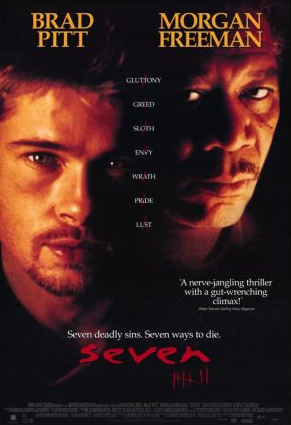
We looked into a number of title
sequences to get a feel for what we wanted ours to look like. Our main
inspiration was Se7en. Se7en is a simple title sequence, yet effective in
creating anticipation for the film.
 Our film narrative is based on a very
clever mass murderer who leaves subtle clues and riddles for the police to pick
up on. The film is more focused on the chase from the police rather than the
murderer. This is contrary to out title sequence, which focuses on the killers
lair, where he plans and looks back on previous killings. We did this in the
title sequence as it saves time in the film, as the a little background on the
killer has been shown.
Our film narrative is based on a very
clever mass murderer who leaves subtle clues and riddles for the police to pick
up on. The film is more focused on the chase from the police rather than the
murderer. This is contrary to out title sequence, which focuses on the killers
lair, where he plans and looks back on previous killings. We did this in the
title sequence as it saves time in the film, as the a little background on the
killer has been shown.
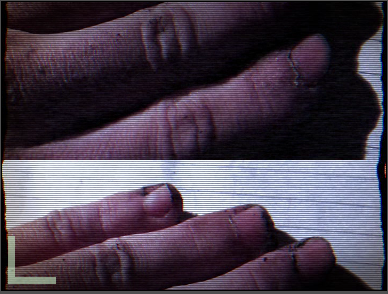
Many of our camera shots were
very close up, burring out the surroundings or only having a key light focusing
on one area that blacked out the background, which puts focus on the object in
frame. We used the occasional canted angle to just vary the shots that we used,
as most of the movement was added in editing. We didn’t have any panning or
moving shots because of how close up and detailed the still shots were. In
editing we used the Bad TV effect to create movement, rather than just having
still images.

The background sound we used was
in the genre of ‘industrial’ or ‘industrial metal’, which is a heavy and
intense sound. We used this as it build up suspense and horror in the title
sequence. The as the music moved on, it gradually got heavier and more haunting
until the light went out and the music dulled down again.
The mise-en-scene of the title
sequence was very dark, small and cramped. It was based in a shed therefore we
needed to convey the size. We used many close up shots; this meant the viewer
feels closer to the killer and what is happening as they can see every little
detail of his workbench and his hands in some shots. As there are no panning
shots the audience can only see from what’s burred out behind the main object,
this could be said to create suspense.


Our typography is a scratchy
front, which looks like someone has written the words and then back gone over
them a few times. This could be said to be the killer’s handwriting, as it
looks very erratic. Furthermore, it fits very stereotypically into the
suspense/thriller genre.

Finally, our title sequence
doesn’t necessarily challenge the conventions of traditional media in this genre, rather
fits perfectly into it. We wanted it to be clear as to what the film would be
about and we feel we have achieved that.
Monday, 17 March 2014
Who Would Be The Audience For 'Post-Mortem'?
Who Would Be The Audience For 'Post-Mortem'?

Our target audience is mainly men aged 15 - 30 as they are the most common group to view a film that is in our genre. The target audience is primarily to be white, working/middle class (working class but with money to spare for leisure) and have a job in the skilled manual work sector. He is not married, possibly with a child and in a relationship. Our male audience members (over the age of 18) would also be inclined to go to the pub after work and do more manly things with their day, so I movie of this genre tends to be of choice when visiting the cinema.
Our secondary audience is very similar to the primary audience only female. They will be of the same age range and class with the same marital status. This tends to be because the man and woman would go together to the movie. On the other hand, more women are going to see films in the thriller genre as a change from their stereotypical romantic comedy.
We researched this by looking at the average audiences of this film genre thus being able to create a target audience for Post-Mortem.
Subscribe to:
Posts (Atom)